


Sustainable Campus Operations
Our journey towards a more sustainable campus
Rosenheim Technical University of Applied Sciences has set itself the goal of making its campus operations increasingly sustainable. Our strategic objectives in this regard are:
- Establishing and expanding structures for sustainable university operations
- Reducing energy and resource consumption
- Reducing emissions from transport
- Measures to adapt to climate change
We consistently focus on measures that deliver results. With our integrated climate protection concept from 2022, we have a clear roadmap.
On these pages, we show what we are doing – and how you can get involved too.

Sustainable Construction at Rosenheim Technical University of Applied Sciences
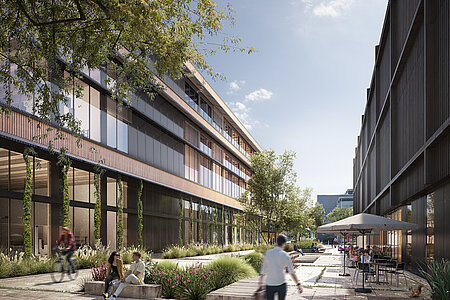
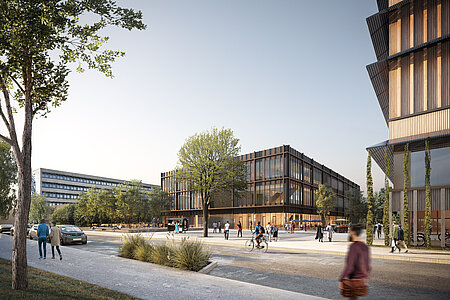
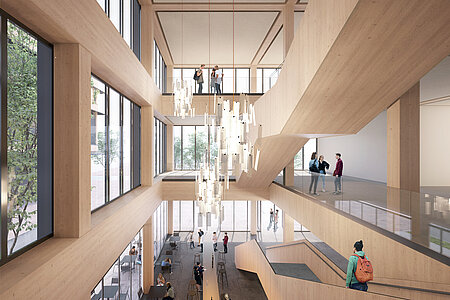
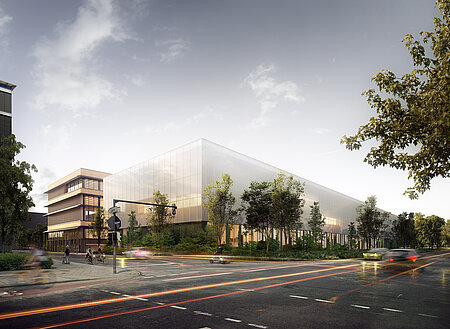
Sustainable construction
Whether for new builds or refurbishments, our aim is to design buildings that are fit for the future – with a clear focus on conserving resources, low energy consumption and long-term environmental sustainability. We therefore pursue three objectives for new builds:
- Timber construction: Timber is a renewable raw material. Timber construction enables rapid build times through prefabrication, offers excellent thermal insulation, and allows the timber to be recycled or used as fuel at the end of its life cycle.
- Sustainability certification to ensure high standards in resource conservation, energy efficiency, pollution prevention and life-cycle costs.
- BIM projects: Building Information Modelling (BIM) is a collaborative working method in the construction industry based on digital 3D models, designed to optimise buildings throughout their entire life cycle – from design through construction to operation.
The X and U Buildings – The largest construction project in the university’s history
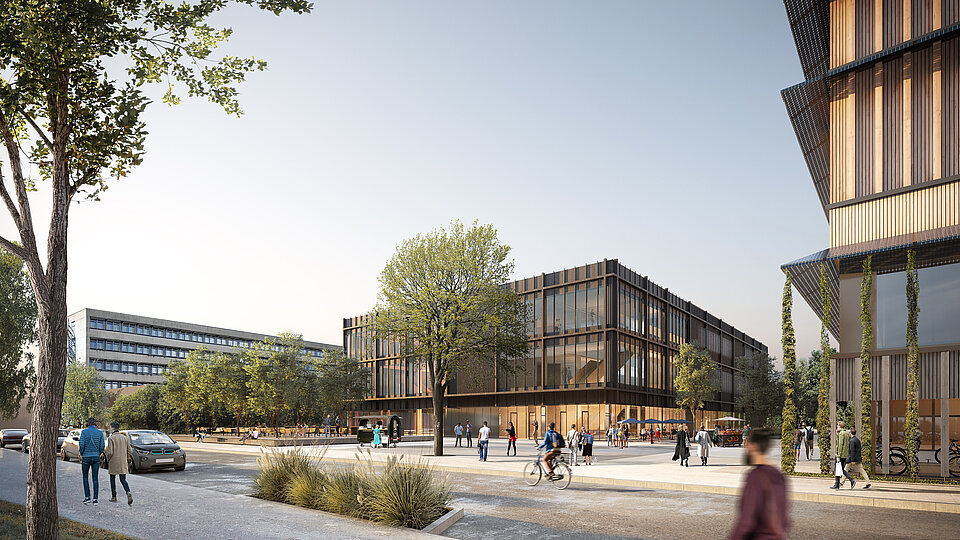
In July 2025, the ceremonial ground-breaking took place for a campus extension comprising two new buildings. This is the largest construction project to date undertaken by Rosenheim Technical University of Applied Sciences. The new development is being funded by the Bavarian State Government as part of the Bavarian High-Tech Agenda.
Over the coming years, an innovative technology park (X-Bau) is to be built on the site of the former Bogensiedlung next to the Rosenheim campus, featuring a wide range of hall and laboratory spaces for research and teaching. Alongside this, a student centre (U-Bau) is being developed, which, in addition to a digital learning centre – the library of the future – will bring together a new canteen and a range of services for our students: the Registrar’s Office, the Student Services Organisation, the Student Advisory Service, the Social Counselling Service, the Career Centre and the Start-up Office, as well as a parent-child room. The new canteen, featuring a café bar, and the library’s roof garden are intended to serve as meeting places and hubs for communication for the entire university community.
Sustainability is a key aspect
Sustainability is a key aspect in the planning and construction of the new buildings. The buildings will be constructed using timber and are intended to achieve a Gold certificate under the ‘Sustainable Building Assessment System’. This certifies outstanding quality and sustainability in ecological, economic, socio-cultural, functional and technical terms. Against this backdrop, all roof surfaces and parts of the façades will be greened. The open spaces are to be planted with climate-resilient trees and shrubs, whilst taking biodiversity into account.
Top sustainability award for the CampusRO student quarter
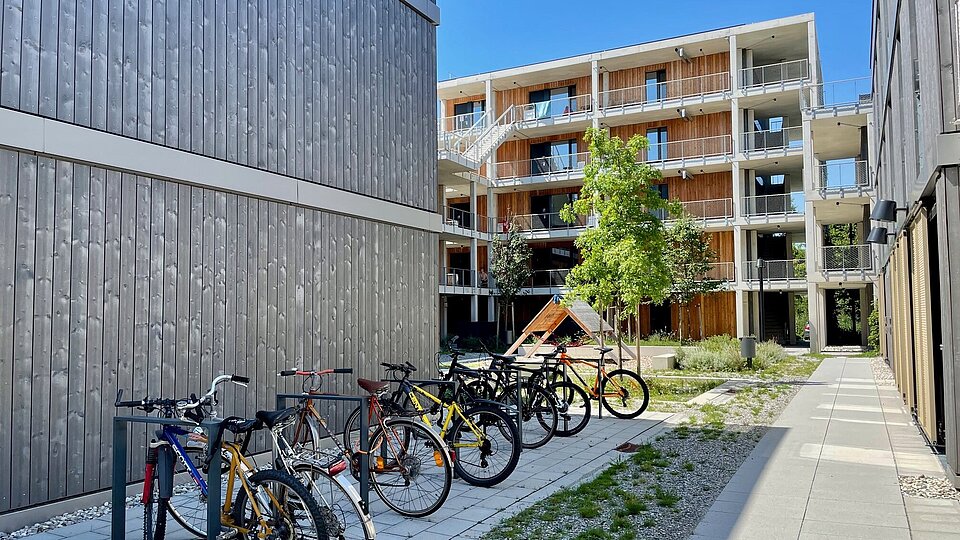
Germany’s most sustainable student accommodation complex is in Rosenheim
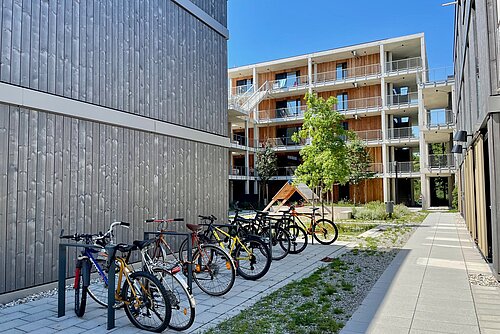
CampusRO, the flagship project for student accommodation, has received the state’s highest sustainability award. At a formal awards ceremony, the complex – built using a hybrid timber construction method – was praised by the German Sustainable Building Council (DGNB) as a “pioneering example of innovative construction and operation” and was awarded the coveted Platinum certificate.
With this award, CampusRO Projektgesellschaft – a joint venture between the Eckpfeiler Immobilien Group and Professor Peter Astner – sees its successful track record in project development in accordance with the highest sustainability standards vindicated. Sustainability, the circular economy and recycling were central to the planning of the neighbourhood. However, CampusRO Projektgesellschaft also took into account the high quality of life for residents and the development of an inclusive neighbourhood for all. “For us, sustainable construction and operation are at the heart of our corporate philosophy. We want to create neighbourhoods that are liveable and make ecological and economic sense in the long term. And not just during construction, but also during operation,” said Astner, who teaches at Rosenheim Technical University of Applied Sciences.
A whole lot of expertise from Rosenheim University of Applied Sciences in CampusRO
The university is also delighted with the award. Not only because CampusRO gives students the opportunity to live in a very special residential quarter, but also because the building incorporates a wealth of specialist knowledge from the university. Working alongside the project company, students from TH Rosenheim contributed to the planning and development of CampusRO through working groups and research projects, with the aim of creating a student hall of residence that reflected their own ideas and met the highest standards of sustainability.
CampusRO’s outstanding environmental performance is also intended to serve as a model for the major Technology Park and Student Centre construction project, which is to be built alongside the university in the coming years. At the presentation of the DGNB Platinum certificate, President Professor Heinrich Köster said: “By using the right materials in the right places and through consistent, early-stage planning, CampusRO demonstrates that sustainable construction can also be affordable.”
The residential complex offers accommodation for 211 students in single flats and shared flats, and there are also 40 furnished flats. Right on the doorstep, green courtyards and roof terraces invite residents to relax. A spacious communal kitchen is available for cooking together or hosting parties. The campus is complemented by a large function room, co-working spaces, a gym, a parcel collection point, a launderette and a bicycle repair workshop. Since February 2024, CampusRO has been owned by a German family foundation that supports the values and sustainable philosophy of the neighbourhood.
You can find more information about student accommodation here.
TH Rosenheim launches an energy management system in accordance with DIN ISO 50001
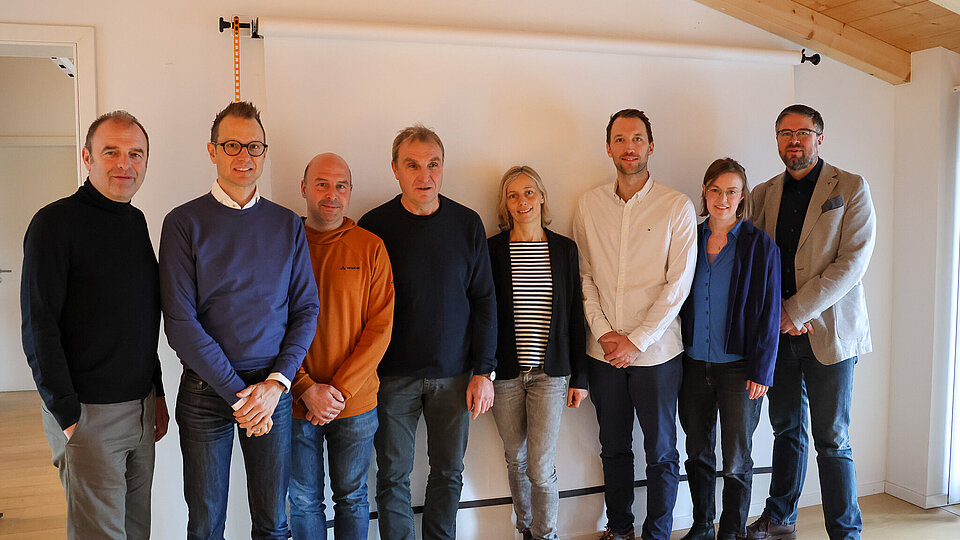
TH Rosenheim is taking another important step towards a sustainable campus and greater energy efficiency: at the end of 2025, a project was launched to introduce a university-wide energy management system (EnMS) in accordance with DIN ISO 50001, with the aim of systematically recording, analysing and optimising energy consumption. The aim is to use energy more efficiently, reduce CO₂ emissions and make processes more environmentally friendly – all as part of a continuous improvement process.
You can find more information about the energy management system here.
Four weather stations at TH Rosenheim
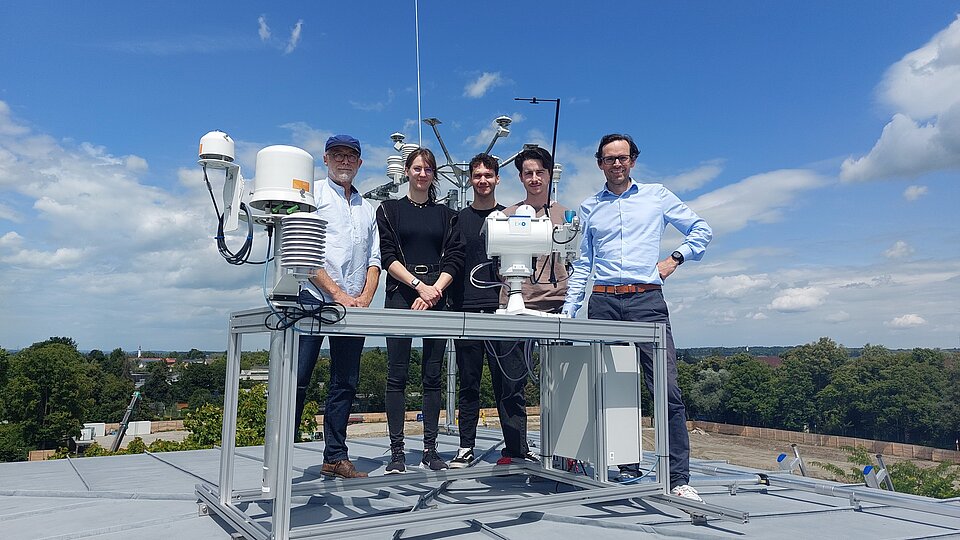
Meteorological stations are the ‘eyes and ears’ of our climate – and thus the foundation for sustainable action.
The Solar Technology Working Group at Rosenheim University of Applied Sciences operates a network of four weather stations in the districts of Rosenheim and Traunstein, equipped with high-precision, partly redundant sensor technology. The data is recorded every second and stored in a database. The detailed measurement data is used for basic research in the field of solar and energy meteorology, for real-time monitoring and forecasting, and for monitoring renewable energy generation systems in the energy and building sectors.
Real-time weather data now also available to the public
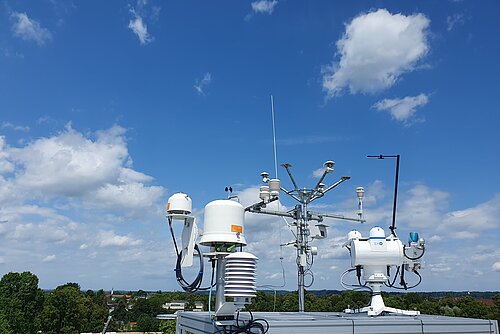
The new station on the roof of Rosenheim Technical University of Applied Sciences is one of the most technically advanced of its kind in the region. Using digital sensors, it records a wide range of weather parameters – including temperature, humidity, air pressure, solar radiation, wind direction and speed, and precipitation. A webcam also provides a real-time view of the campus and towards the Inn Valley.
The station, which was installed in August 2025, is set to be fitted with further sensors in the future, for example to measure CO₂, particulate matter, radioactivity or to include a cloud camera. The university’s network of weather stations is also set to expand: in addition to the new facility in Rosenheim, the Technical University already operates stations at the Winklmoosalm (TS district), on the summit of the Hochfelln (TS district) and at the Brünnstein near Oberaudorf. Further expansion – possibly in cooperation with local authorities, public bodies or companies – is planned.
The measurement data is also used in various courses, particularly in the Solar Technology module. Furthermore, it supports research projects such as ‘Helios’ and ‘Roberta’. Public authorities such as the Civil Protection Agency and the Water Management Office could also benefit from the open data platform in future.
The public website displaying the latest measurements is permanently accessible. In the next phase of development, it will also be possible to download historical weather data.
You can find more information about the weather stations here.
Plastic pens in the circular economy: small parts, big effect

At our university, there are everyday examples of how we can close cycles in a meaningful way. The holders for toilet roll are made of small plastic pins. They used to be thrown away, but now the cleaning staff collect them separately. The idea came about thanks to the initiative of one member of staff: Steffi Wieland from the IT department is responsible for bundling and passing on the pins. In the plastics processing laboratory, they serve as recycled raw material for teaching and research purposes. This is a practical example of how waste can be avoided and resources reused directly on campus.
Die leihBar – a living example of a sharing culture on campus
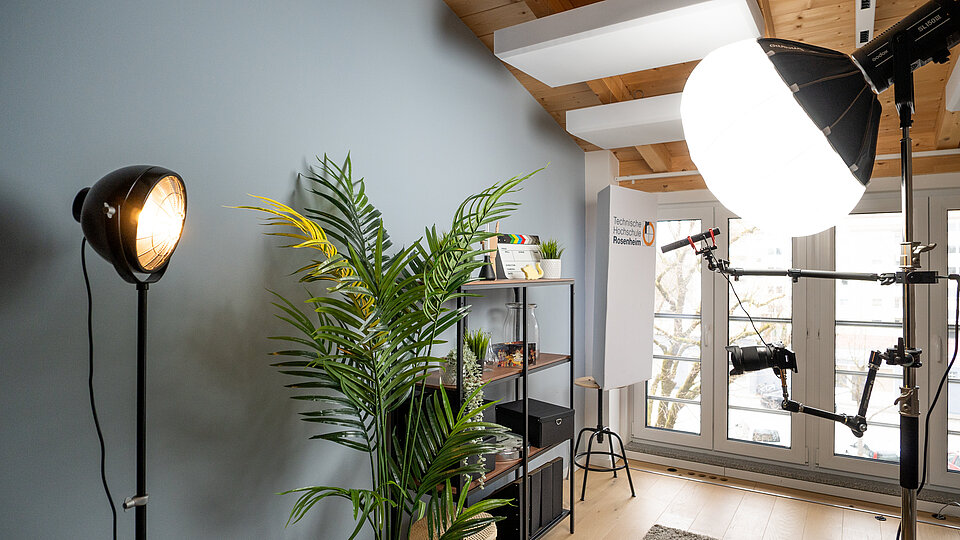
Since 2024, Rosenheim Technical University of Applied Sciences has had a new service – the university-wide lending platform ‘leihBar’. This software enables university staff and students to communicate, plan and manage the resources they offer to students and other members of the university community.
On the TH Rosenheim dashboard (on the university’s own intranet, accessible only to university members), availability can be checked online and the required equipment booked directly.
A good example of this is the E-Learning Centre’s offering, which, in addition to media technology, also provides facilities including an acoustically optimised video and podcast studio.
If you are interested in presenting what your department has to offer to the university as part of a sustainable culture of sharing, the E-Learning Centre is available to answer any questions you may have. The implementation of ‘leihBar’ was made possible by the HigHRoQ project and thus by the Foundation for Innovation in Teaching.
Foodsharing Rosenheim partnership – Working together to tackle food waste

Since 2025, students at Rosenheim Technical University of Applied Sciences have been working with foodsharing Rosenheim at student events. This ensures that edible food ends up on plates rather than in the bin.
Since 2017, foodsharing has been campaigning against food waste in and around Rosenheim. foodsharing is a voluntary movement that campaigns against food waste and promotes a greater appreciation of food. Food that is edible but no longer suitable for sale is collected from partner businesses – and then redistributed so that it is put to good use. This collaboration reduces waste. It saves on waste disposal costs and reduces the burden on the environment. At the same time, resources are conserved through the food that is saved. This example shows that sustainability can begin with small, concrete steps and foster a sense of solidarity.
Free drinking water dispensers for everyone
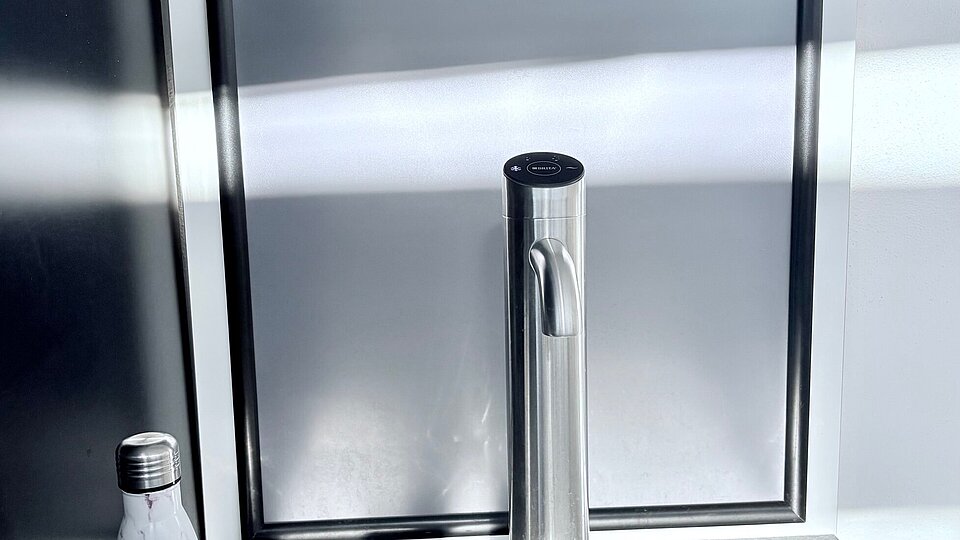
TH Rosenheim currently has four drinking water dispensers, which are available free of charge to all members of the university community. You can fill your own water bottle with high-quality water there at any time, thereby helping to reduce packaging waste and emissions caused by transport.
The water dispensers are located:
- Two water dispensers near the main entrance in the A Building, in the foyer on the left-hand side
- One water dispenser in the S Building: in the foyer at the far west end
- One water dispenser in the R Building: between the first and second ‘fingers’
- The installation of two further water dispensers is planned for spring 2026.
CaMoRoT Project – Rosenheim-Traunstein Campus Mobility

Share your bike, share your ride
The CaMoRoT research project is introducing an innovative mobility management scheme for TH Rosenheim at the Rosenheim and Traunstein campuses. This includes additional cycle parking spaces at strategic locations on the Rosenheim campus, a bike-sharing scheme between the railway station and the university in both Rosenheim and Traunstein, and a car-sharing platform for commutes in the region. The aim is to encourage staff and students at Rosenheim Technical University of Applied Sciences to reduce their (individual) use of private cars, thereby making the university as a whole more sustainable and helping to reduce CO₂ emissions. To this end, we are consulting staff and students on how, for example, the bike-sharing scheme should be specifically designed to encourage its use – and will then develop it to meet the needs of different target groups.
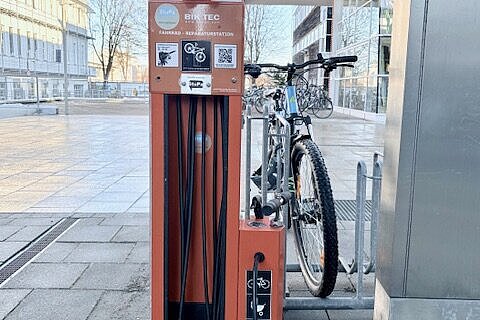
- Bicycle parking spaces: For convenient parking of your own bicycle. Located in central spots, suitable for all standard tyre widths, some covered, and securely lockable.
- Bike-sharing: For the last mile between the station and the campus. Easily accessible, simple to use. For maximum flexibility when connecting with public transport.
- Carpooling platform: For climate-friendly pooling of regional journeys. Digital mobility assistant for hassle-free coordination. With a high degree of planning certainty.
- Fahrradabstellplätze: Für ein gutes Abstellen des eigenen Fahrrads. An zentralen Orten, für alle gängigen Reifenbreiten, teils überdacht, sicher abschließbar.
- Bikesharing: Für die letzte Meile zwischen Bahnhof und Campus. Gut zugänglich, einfach nutzbar. Für eine hohe Flexibilität im Anschluss an den ÖPNV.
- Mitfahrplattform: Für eine klimagerechte Bündelung regionaler Fahrten. Digitaler Mobilitätshelfer zur unkomplizierten Vernetzung. Mit hoher Planungssicherheit.
-
‘Wohin-du-willst’ app: Providing comprehensive information on combining various mobility options, including those offered by TH Rosenheim. Designed to foster engagement.
These four workplace mobility measures will be rolled out in stages by mid-2027. Funded by the Federal Ministry of Transport | Mobil gewinnt.
Further information is also available on the CaMoRoT project website.
Cycling at TH Rosenheim
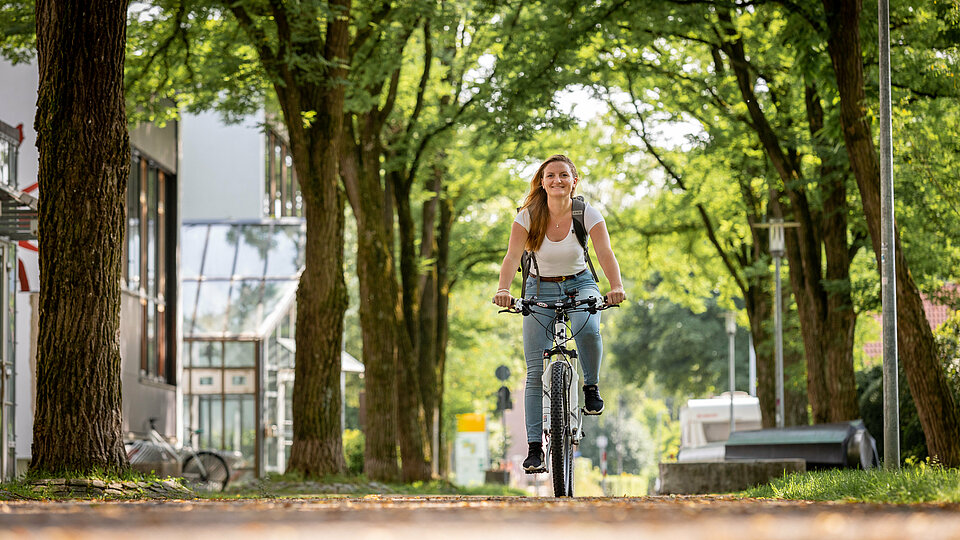
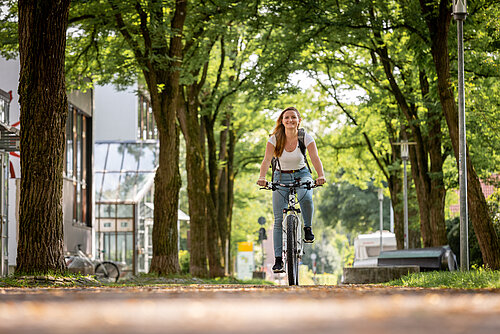
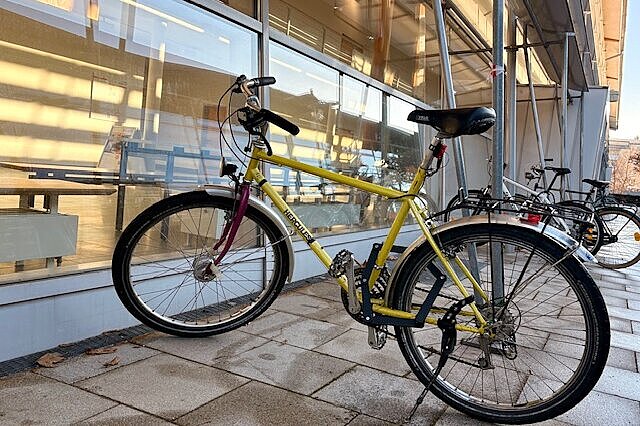
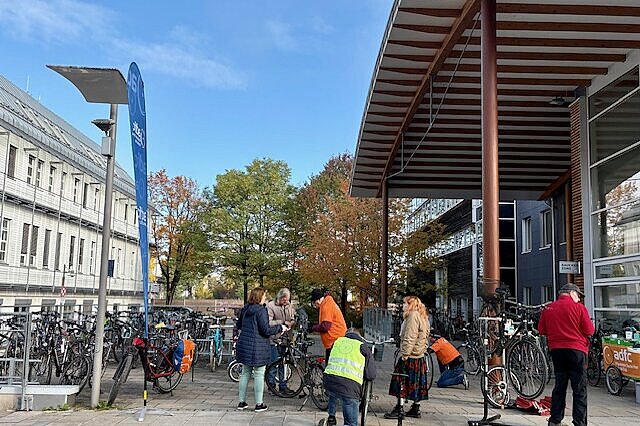
Here, you can find all the information you need about cycling at our university. We want to become more cycle-friendly and promote healthy and sustainable travel.
Paper consumption

Use of recycled paper
In recent years, TH Rosenheim has consistently switched to more environmentally friendly paper products. Instead of non-recycled virgin fibre paper, we now rely largely on certified recycled paper. This step is a key building block towards more sustainable procurement, as every sheet of recycled paper saves resources (wood, water, energy) and helps protect the environment through lower CO₂ emissions.
Reducing paper consumption through digitalisation
An even more important step towards conserving resources is to continuously reduce paper consumption. Digitalisation can play a significant role in this regard.
ROcycleTH: Where waste becomes a resource – TH Rosenheim's campus with a recycling cycle

The ROcycleTH project is working towards creating a resource-efficient university that operates (almost) entirely without the use of virgin plastic. Whereas previously between one and ten tonnes of virgin plastic were used per semester, the focus is now almost entirely on recycling, with hardly any virgin material being used. Instead, plastics are collected, analysed and recycled for at least ten years. Through the ROcycleTH project, the team has succeeded in determining the degree of ageing of the plastics, grinding down the manufactured products, regranulating them and reusing the resulting granulate. The recycling hub, located in the Y-Bau, houses the grinder and the specialised analytical equipment used to measure ageing. At the same time, the recycling hub is suitable for school classes and further education, as well as for demonstration purposes and as a pilot plant for industry.
![[Translate to English:] Wasserspiel an der TH Rosenheim am Campus in Rosenheim](/fileadmin/_processed_/1/4/csm_Campus_TH_Rosenheim_b6724d0edf.jpg)

New Building for Physiotherapy and Research sets new standards in university construction
New Building for Physiotherapy and Research sets new standards in university construction
TH Rosenheim publishes its sustainability strategy
TH Rosenheim publishes its sustainability strategy![[Translate to English:] Das Bild zeigt Vizepräsident Professor Uwe Strohbeck im Kreis der Projektmitarbeitenden und Mobilitätsbotschaftern der TH Rosenheim](/fileadmin/_processed_/6/1/csm_Gruppenbild_Aktionstag_Projekt_CaMoRoT_31f81d8064.jpg)
Bike-sharing scheme launched for students and staff
Bike-sharing scheme launched for students and staff
Let's create the future of our university together!
Let's create the future of our university together!
Project details
Title: KSI: Climate Protection Management for the Implementation of the Rosenheim University of Applied Sciences’ Integrated Climate Protection Concept – Follow-up Project (KSI: Klimaschutzmanagement zur Umsetzung des integrierten Klimaschutzkonzeptes der TH Rosenheim – Anschlussvorhaben)
Duration: 1 February 2023 – 31 July 2026
Implementing body: Rosenheim Technical University of Applied Sciences – Centre for Research, Development and Transfer (Technische Hochschule Rosenheim – Zentrum für Forschung, Entwicklung und Transfer)
Funding reference: 67K14067-1
Aim and content of the project: The proposed follow-up project aims to implement the key measures from the climate protection strategy and to institutionalise climate protection management at Rosenheim Technical University of Applied Sciences.
Project sponsor: www.klimaschutz.de/kommunalrichtlinie
National Climate Protection Initiative (NKI)
Through the National Climate Protection Initiative, the German Federal Government has been initiating and funding numerous projects since 2008 that contribute to reducing greenhouse gas emissions. Its programmes and projects cover a broad spectrum of climate protection activities: from the development of long-term strategies to practical support and investment-based funding measures. This diversity ensures a wealth of good ideas. The National Climate Protection Initiative helps to embed climate protection at a local level. It benefits consumers as well as businesses, local authorities and educational institutions.