
Dual Study Programme
The Rosenheim Study Model – integrating academic study with industry experience
The Faculty of Engineering's dual study programmes closely combine academic study with practical experience in industry. Depending on the programme, students can either complete a degree with extended practical experience (co-op) or combine their bachelor's degree with vocational training (apprenticeship).
Throughout the programme, students divide their time between the university and a partner company. Academic studies and practical work are closely coordinated so that what students learn in the classroom can be applied directly in the workplace.
Verbundstudium
A Verbundstudium combines a bachelor's degree with a state-recognized apprenticeship (Berufsausbildung). Students work toward both qualifications simultaneously, allowing them to earn a university degree and a vocational qualification within a coordinated programme.
At the beginning of the programme, students are employed by their partner company as apprentices and complete the practical and vocational requirements of their apprenticeship. After successfully completing the final apprenticeship examination—or when the apprenticeship contract ends—they continue working with the company during paid internship periods for the remainder of their degree programme.
Completing the remaining industrial experience as a full-time, semester-long internship (Praxissemester) is recommended for a Verbundstudium.

Studium mit vertiefter Praxis
A Studium mit vertiefter Praxis is similar to a cooperative education (co-op) programme, where students alternate between periods of academic study and paid work experience with a partner company throughout their bachelor's degree. Unlike a Verbundstudium, it does not include a formal apprenticeship, but students gain significantly more practical experience than in a traditional degree programme.
Students usually complete their work placements during semester breaks, allowing them to apply what they have learned in class while developing practical skills and professional experience.
This study model workrs best when the industrial work experience is distributed across multiple shorter periods at the partner company rather than a single, semester-long internship (Praxissemester). The semester schedule at the TH Rosenheim has been adjusted specifically to facilitate extended work periods during semester breaks (described below).
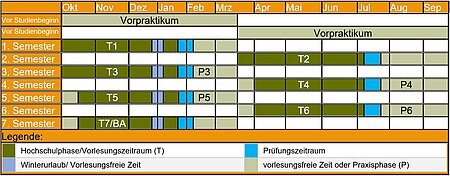
Adjusted Lecture Schedule in the Rosenheim Study Model
To provide longer uninterrupted work placements with partner companies, the lecture schedule for bachelors students in the Faculty of Engineering differs slightly from the standard academic calendar – what we call the Rosenheimer Studienmodell. These adjusted lecture dates apply to all students in the participating degree programmes, not just those enrolled in a dual study programme.
The lecture schedule for the first three semesters follows the standard Bavarian academic calendar. Beginning in the fourth semester, however, lectures start two weeks later than usual. This creates time for extended work placements after semesters 3 through 6 without delaying students' overall progress through the degree programme.
Despite the later start date, lectures end at the same time as at other Bavarian universities. The examination period also remains unchanged. As a result, students can transfer to or from another university without disadvantage while still benefiting from longer periods of practical work experience.
Organizational Coordination
Close cooperation between TH Rosenheim and its partner companies is a key feature of the Rosenheim Study Model. Representatives from the university and industry work together through joint advisory committees and the Duales Studium working group to coordinate and continuously develop the dual study programmes.
For programme-specific information, please contact the internship coordinator (Praktikantenbeauftragte) for your degree programme.
Contracts and Agreements
TH Rosenheim provides standard contract templates for dual study programmes based on the models developed by *hochschule dual*. These agreements define the rights and responsibilities of both the student and the partner company, as well as the organization of the academic and work-placement phases.
Students applying for a dual study programme submit the signed agreement as part of their application to TH Rosenheim. Partner companies also conclude a cooperation agreement with the university. Further information, including the contract templates and cooperation agreements, is available on the university's website.
Integrating Academic Study and Practical Experience
The curriculum for dual-study students combines academic coursework at the TH Rosenheim with practical experience at their partner company. In addition to their university studies, students complete several degree requirements within the company.
Preliminary Internship
If the 8-12 week preliminary internship (Vorpraxis) has not already been completed prior to the start of the program, it must be completed at the partner company after enrollment.
Primary Internship
The primary internship (24 ECTS credits) must be completed at the partner company, either as a traditional 18-week Praxissemester or during the four extended semester breaks described above.
Project assignments
To further integrate academic study and industrial practice, students complete several project assignments (5 ECTS credits each) at their partner company. The number of required projects depends on the degree programme.
Each project is supervised and assessed by a university professor with expertise in the relevant subject area. The project topic is developed jointly by the student, the partner company, and the university to ensure that it supports the learning objectives of the corresponding stage of the degree programme.
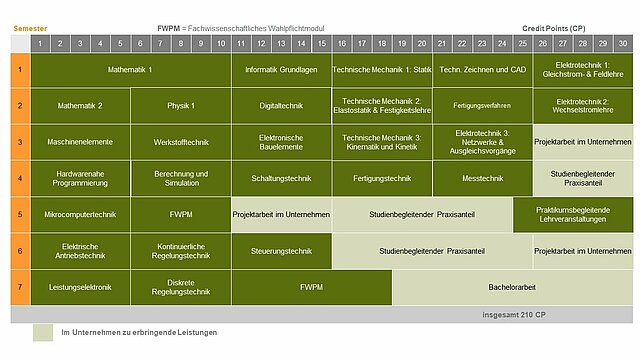
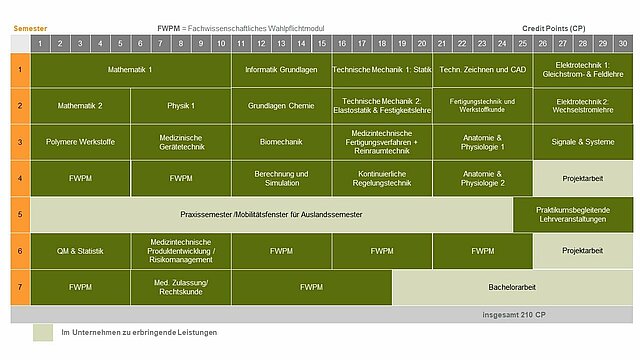
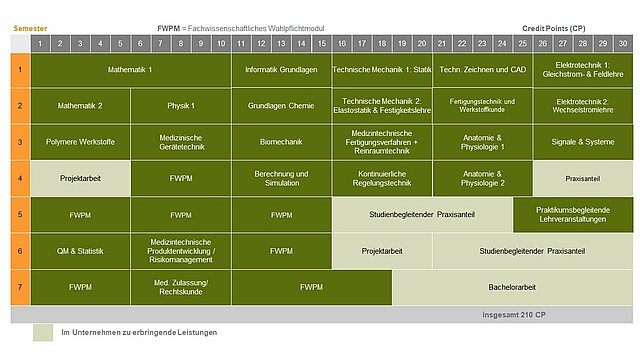
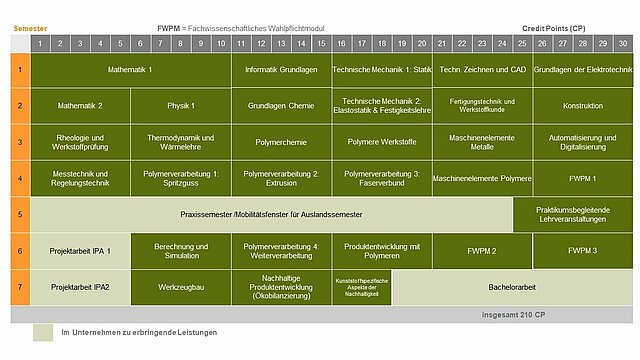
Because these project assignments are specific to the dual study programme, the curricula for dual-study students differ slightly from those of students in the standard degree programme. In the study plans, all requirements completed at the partner company are highlighted for easy reference.
Bachelor's thesis
Students also complete their Bachelor's thesis (12 ECTS credits) in collaboration with their partner company. The topic and scope of the thesis project are agreed upon by the student, the company, and the supervising university professor.
Further Information for Prospective and Current Students
Detailed information about dual study programs is available on the university's website. You can also learn more at in-person events like student visit days or online information sessions. If you have any questions, the university’s central advising office (Zentrale Studienberatung) or the academic advisor (Studiendekan) for your chosen degree programme will be happy to help.
Study Schedule for the Degree Programs
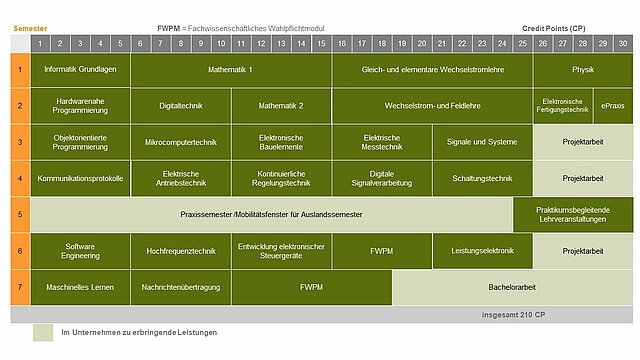
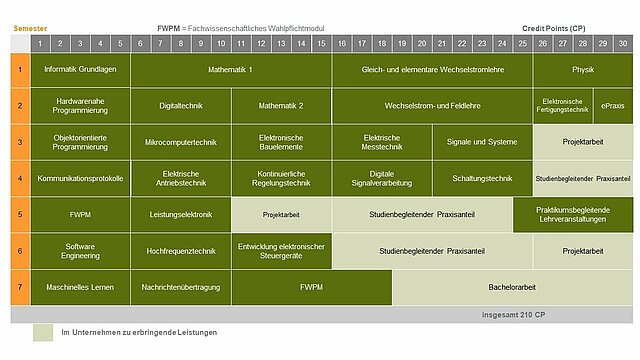
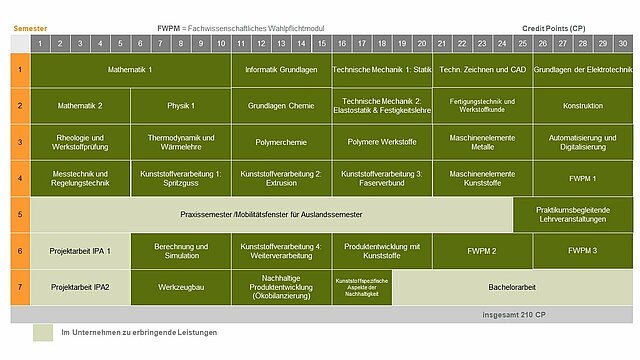
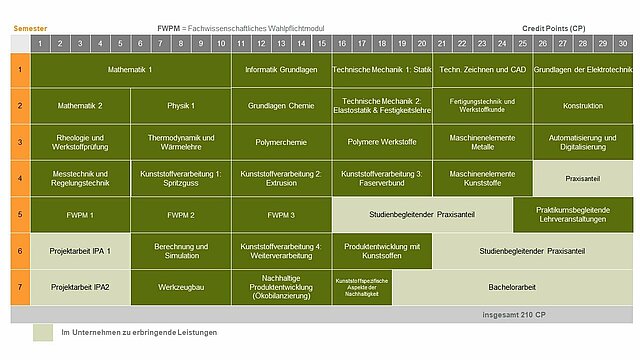
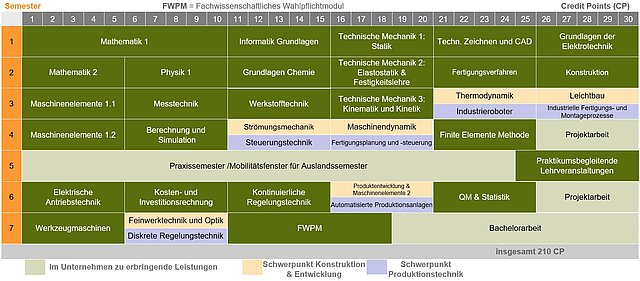
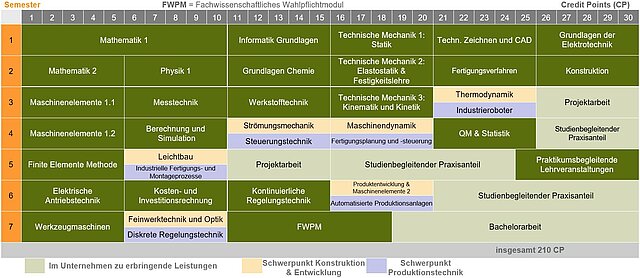
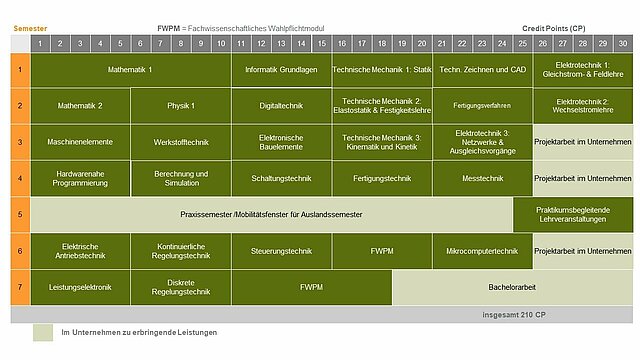
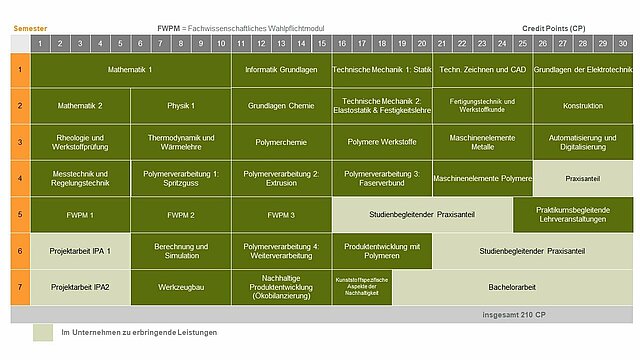
Information sheets and forms for project work
Project work for the Bachelor's degree program in Electrical and Information Engineering: see study plan, Chapter 7.
Information Sheet: Project Work – Bachelor's Degree Program in Plastics Engineering
Information Sheet: Project Work – Mechanical Engineering Bachelor's Degree Program
Information Sheet: Project Work – Mechatronics Bachelor's Degree Program
Information Sheet: Project Work – Bachelor's Degree Program in Medical Engineering
Information Sheet: Project Work – Bachelor’s Degree Program in Sustainable Polymer Technology (work in progress)
Form: Registration and Assessment of a Company-Based Project for a Dual Study Program
Information Sheet: Preparing Reports for Project Work (work in progress)