
Dual study
The Rosenheim Study Model – close integration of theory and practice in dual study programs
The degree programs offered by the Faculty of Engineering based on the Rosenheim Study Model are particularly well-suited for dual study programs featuring intensive practical experience or combined study and training. The learning environments—the university and the company—are systematically integrated in terms of content, organization, and contractual arrangements.
You can find the latest news on this topic in the News section.
Combined study program
The integrated study program (a dual study program incorporating vocational training) is characterized by the fact that students earn a state-recognized vocational qualification in addition to their bachelor's degree. From the outset until the announcement that they have successfully passed the vocational final examination—or until the vocational training contract expires—these students are employed as apprentices within the company. Subsequently, they complete paid practical phases with the practical training partner for the remainder of the degree program. A study model featuring a practical semester is recommended for this type of integrated program.

Dual study program with intensive practical training
The study program with integrated practical experience combines a standard university bachelor's degree with intensive practical phases at a partner company that align with the academic curriculum. Academic study and practical phases alternate systematically; students complete intensive practical phases at the company during semester breaks, allowing them to reflect on and apply the knowledge gained during the theoretical phases. For this type of program, a model without a dedicated practical semester is recommended.
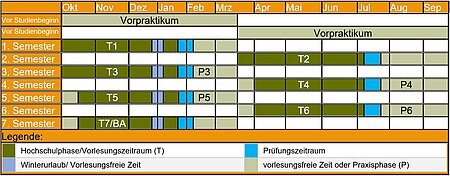
Adjusted lecture times in the Rosenheim Model
To foster closer integration between theory and industrial practice, the lecture schedules within the Rosenheim study model have been adjusted. This adjustment applies to both dual-study and standard students. Lecture schedules for the 1st, 2nd, and 3rd semesters align with the standard schedules at Bavarian universities of applied sciences. In contrast, lectures for the 4th, 5th, 6th, and 7th semesters begin two weeks later. This results in extended practical phases following semesters 3 through 6 (P3 to P6). The end date for lectures in all semesters coincides with the standard schedule at Bavarian universities of applied sciences, ensuring that transferring to or from other university locations remains possible. The examination period applies uniformly to all degree programs at Rosenheim Technical University of Applied Sciences.
Organizational integration of companies and higher education institutions
The organizational integration of business representatives and the university takes place within joint bodies (University Council, Industry and Business Advisory Board) and the "Dual Study Program" working group. Further information on this matter can be obtained from the degree program's internship coordinator.
Contractual integration
Rosenheim University of Applied Sciences provides standard contracts for dual study programs that are based on the templates from *hochschule dual*. These contracts specify, in particular, the rights and obligations as well as agreements regarding the academic and practical phases for both the practical partners and the dual study students. Prospective students use these signed contracts to apply for a place at TH Rosenheim, thereby establishing a contractual relationship between the dual study students and the university. Prior to this, companies enter into a cooperation agreement with Rosenheim University of Applied Sciences that follows the *hochschule dual* template. Further details, as well as the standard contracts and cooperation agreements, are available on the university's website.
Integration of subject matter, practice-oriented course content
The curriculum for dual-study students alternates between theoretical coursework at the university and in-depth practical application within the partner companies. The following academic requirements are fulfilled at the partner company:
Pre-study internship
If the pre-study internship has not already been completed prior to the start of the program, it must be completed at the partner company after enrollment.
Concurrent internship
The concurrent internship, comprising 18 weeks (24 ECTS credits), must be completed at the partner company. Associated practice-related courses (PLV) may also be completed at the partner company, provided they are offered there, for up to 6 ECTS credits.
Project assignments
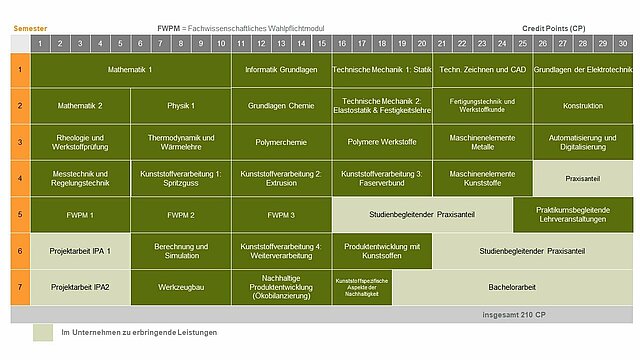
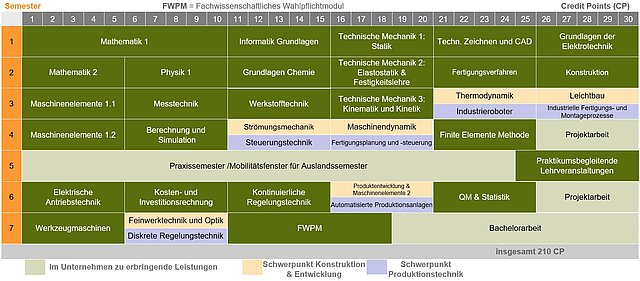
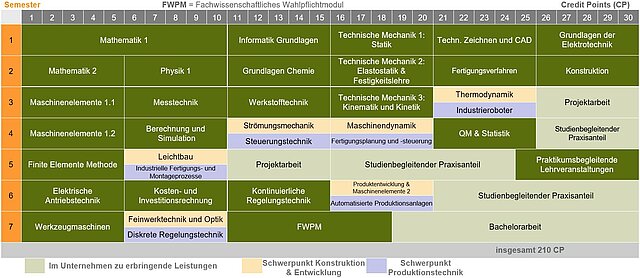
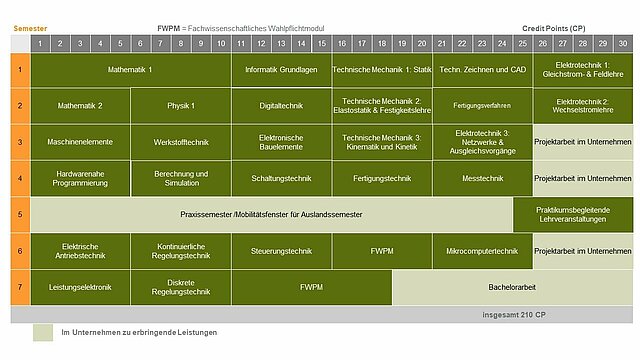
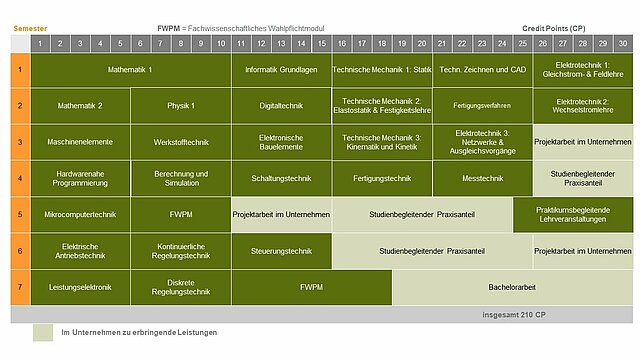
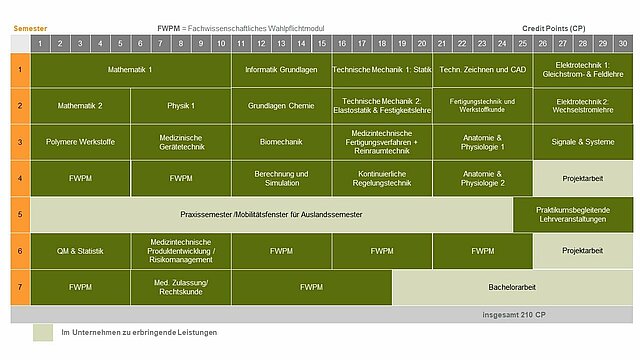
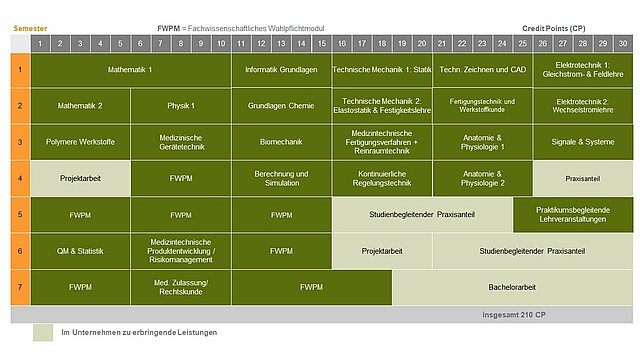
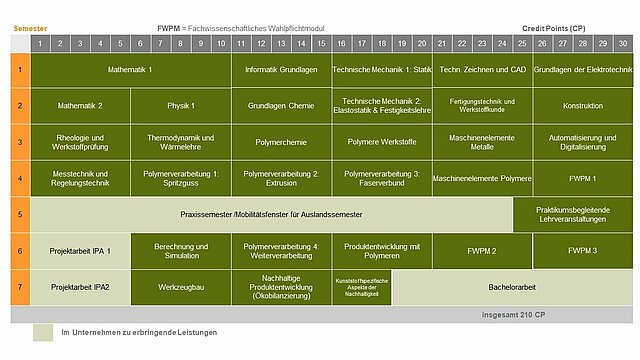
To further integrate the learning environments of the company and the university, the curriculum includes several project assignments, each worth 5 ECTS credits. The number of projects varies depending on the specific degree program. These projects are carried out at the student's partner company. Supervision and assessment are conducted by university professors, selected based on subject-specific expertise. The technical content of a project aligns with the curriculum of the specific study phase in which it is conducted and is determined through consultation between the company, the student, and the university examiners. Since these project assignments are not mandatory for standard (non-dual) students, the curricula for dual-study students are adapted accordingly. In these plans, the academic requirements to be fulfilled at the partner company are color-coded.
Bachelor's thesis
The Bachelor's thesis, worth 12 ECTS credits, is completed at the student's partner company. The topic and the scope of the work are determined in collaboration with the university examiners.
General information on dual study programs for prospective and current students
Prospective and current students can find detailed information about dual study programs on the university's website. Information is also provided during university events, such as taster days. Prospective and current students can obtain further details from the university's general student advisory service or the specific academic advising office for the degree program.
Study Schedule for the Degree Programs
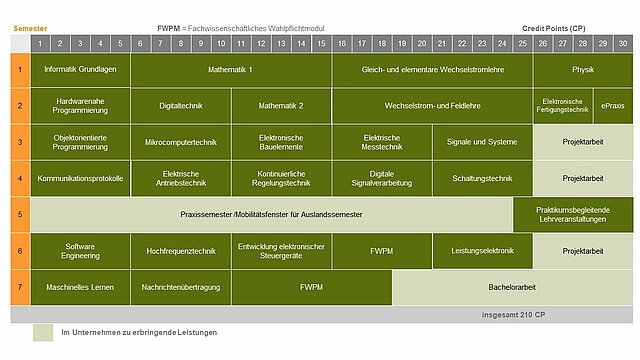
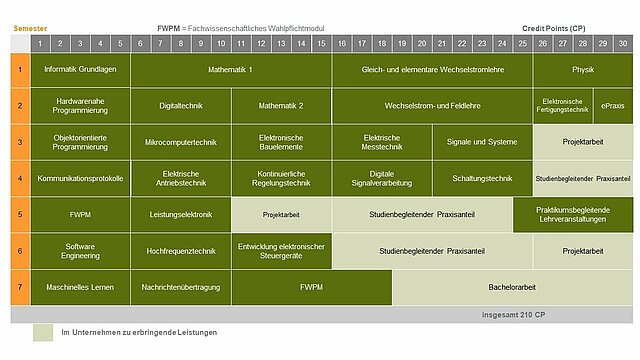
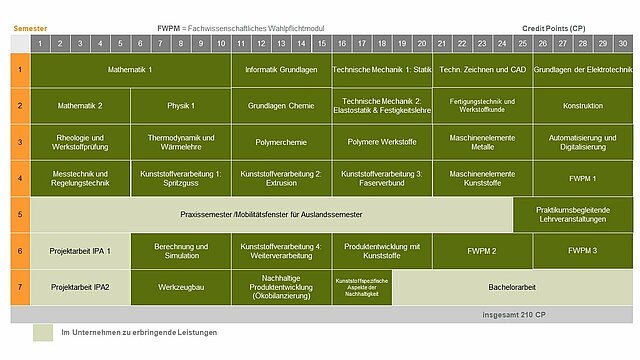
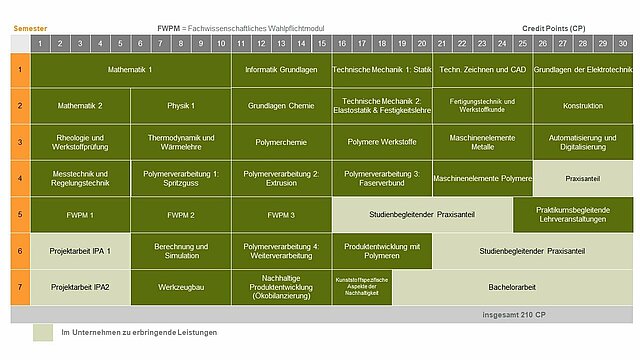
Information sheets and forms for project work
Project work for the Bachelor's degree program in Electrical and Information Engineering: see study plan, Chapter 7.
Information Sheet: Project Work – Bachelor's Degree Program in Plastics Engineering
Information Sheet: Project Work – Mechanical Engineering Bachelor's Degree Program
Information Sheet: Project Work – Mechatronics Bachelor's Degree Program
Information Sheet: Project Work – Bachelor's Degree Program in Medical Engineering
Information Sheet: Project Work – Bachelor’s Degree Program in Sustainable Polymer Technology (work in progress)
Form: Registration and Assessment of a Company-Based Project for a Dual Study Program
Information Sheet: Preparing Reports for Project Work (work in progress)