
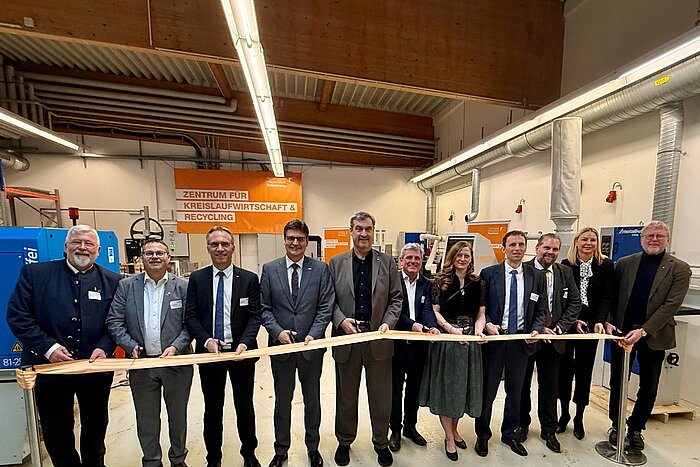
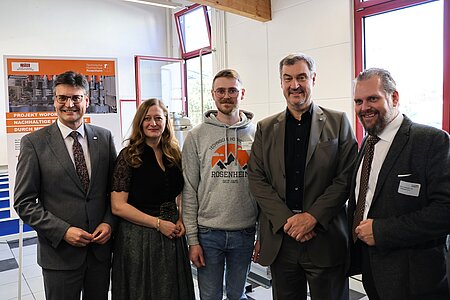
With the grand opening of the new Centre for Circular Economy & Recycling (ZKR) in Waldkraiburg, Rosenheim Technical University is sending a strong signal for sustainable innovation in the region. The event was attended by Bavarian Minister-President Dr Markus Söder and underlined the strategic importance of the centre for research, transfer and economic sustainability.
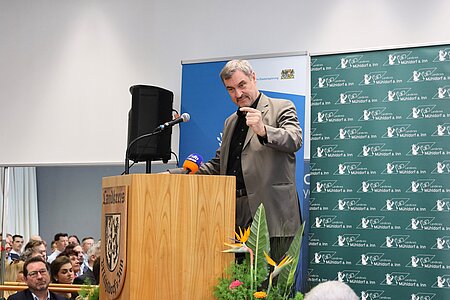
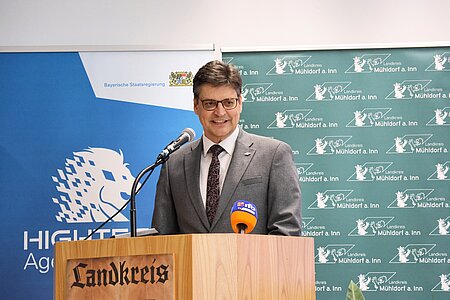
In his speech, Minister-President Dr Markus Söder emphasised: "The circular economy strengthens our economic independence and is key to sustainable growth from an ecological perspective. Research and development are the central assets for the future of our Free State. It is crucial that we translate scientific findings into economic value creation. The Centre for Circular Economy & Recycling here in Waldkraiburg sends a strong signal in this regard and is a gain for the whole of Bavaria."
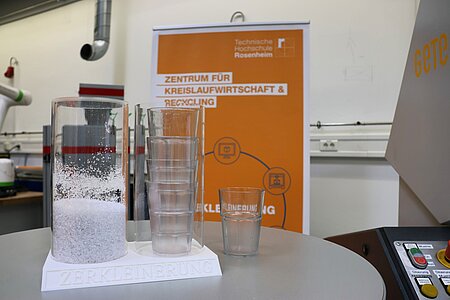
The ZKR is creating a central point of contact for companies throughout the German-speaking region (DACH – Germany, Austria and Switzerland) that want to make their products and processes recyclable, sustainable and, at the same time, more economically attractive. The initial focus is on plastics, with other material groups such as wood, building materials and bio-based materials to follow in the future.
Rethinking the entire cycle
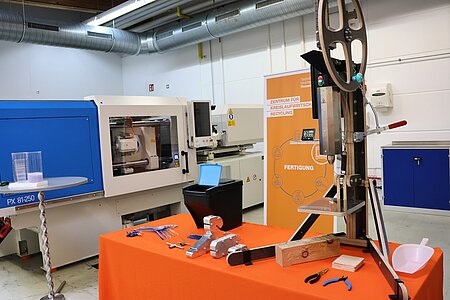
The ZKR pursues a holistic approach: from the development of sustainable business models to product design and manufacturing to recycling, life cycle assessment and economic analyses, the centre covers the entire value chain. The aim is to consistently further develop the established linear economic model and enable closed material cycles.
‘With the circular economy, we can maintain our prosperity while ensuring intergenerational justice and independence,’ emphasises Prof. Dr.-Ing. Johannes Eben, Head of the Centre for Circular Economy & Recycling. ‘At the ZKR, we want to be the point of contact in the DACH region for all questions relating to the circular economy – from business models and product design to technical implementation.’
There are currently only a few comparable institutions in German-speaking countries. The ZKR is thus positioning itself as a strategically important research institution for the circular economy. Prof. Heinrich Köster, President of TH Rosenheim, also emphasises its importance: "Sustainability is a key area of focus for our university. With the Centre for Circular Economy & Recycling, we are specifically strengthening the transfer of knowledge and technology to the regional economy. We combine scientific excellence with concrete benefits for local companies."
Two million euros invested in Waldkraiburg
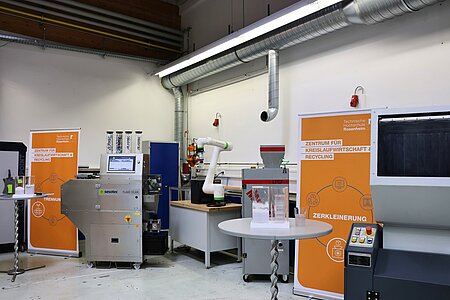
The university has invested around one million euros from funds provided by the Free State of Bavaria's High-Tech Agenda in equipment and infrastructure. In addition, there is around one million euros in industrial contributions. Further investments are already in the pipeline.
Another key factor in the successful establishment of the centre is the support provided by the Mühldorf a. Inn – Waldkraiburg University Campus Association, which provides the university with rent-free premises at the site, thereby making a significant contribution to its structural development.
A total of two professors and five research assistants are currently working at the site. Two employees are pursuing doctorates in the field.
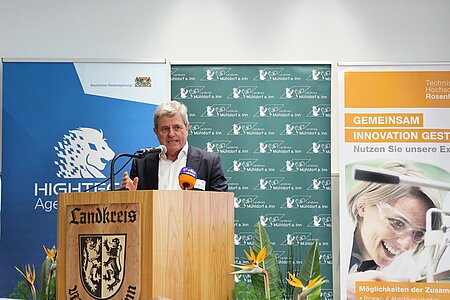
District Administrator Max Heimerl, Chairman of the Zweckverband Hochschulcampus Mühldorf a. Inn – Waldkraiburg, explains: "The Centre for Circular Economy and Recycling fits perfectly into our district, which offers optimal conditions for the development of science and industry. With the opening of the ZKR, we are sending another signal for sustainable value creation and forward-looking innovation. I would like to thank the Free State of Bavaria and the Technical University of Rosenheim for this important structural policy investment and the companies for their financial support of the project."
Concrete benefits for companies
The ZKR is aimed at small and medium-sized enterprises, family businesses, large companies and start-ups. In the open lab model, infrastructure and scientific expertise are also available for specific practical issues – such as the use of recycled materials, the optimisation of sorting and processing procedures, and much more.
At the time of its opening, there were already collaborations with companies such as the Kraiburg Group, Netzsch and partners in Austria and South Tyrol. In recent months, numerous companies have been visited and specific development projects prepared. There is great interest from industry.
In conclusion, Minister President Markus Söder once again emphasised the importance of the location: "Some people ask why such a centre is not being built in the immediate vicinity of a large city like Munich. The answer is clear: the strength and vitality of the Free State of Bavaria come from its rural regions. Here in Waldkraiburg, we are demonstrating how high-tech, sustainability and economic strength go hand in hand – an important component of our innovation and sustainability strategy."
--> More information on research and innovation at TH Rosenheim